
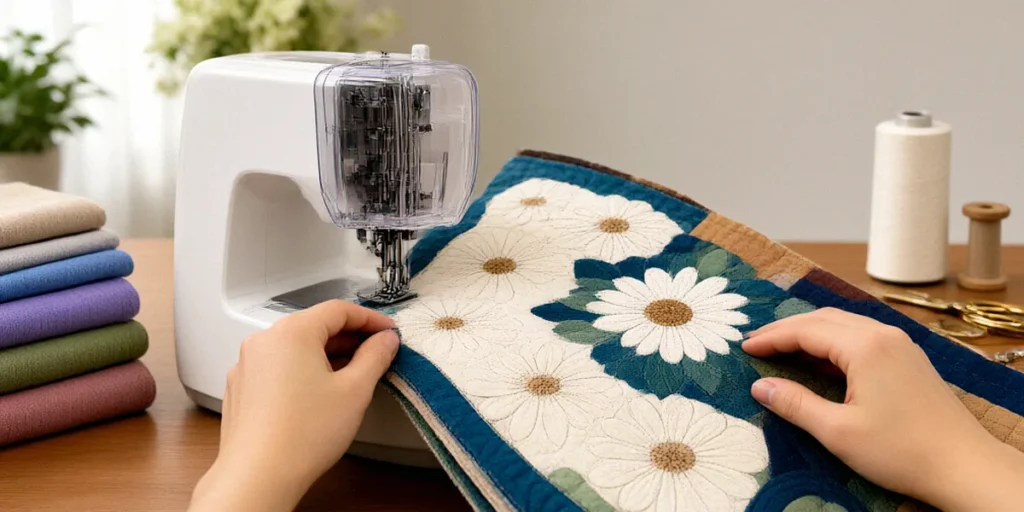
Free-Motion Quilting on a Domestic Machine: A Canadian Quilter’s Guide
We still remember the first time we tried free-motion quilting on a domestic machine. Our shoulders were up around our ears, the tension was off, our stitches looked like a toddler had drawn them, and we had ripped out more thread than we had sewn. Fast forward a few years, and free-motion quilting has become our favourite part of the quilting process. It is the moment a flat quilt top transforms into something textured, personal, and finished. If you have been putting off free-motion quilting because you think you need a longarm or years of practice, this guide is for you. We are going to walk through setup, techniques, troubleshooting, and the Canadian resources that have helped our team the most.
Why Free-Motion Quilting on a Domestic Machine?
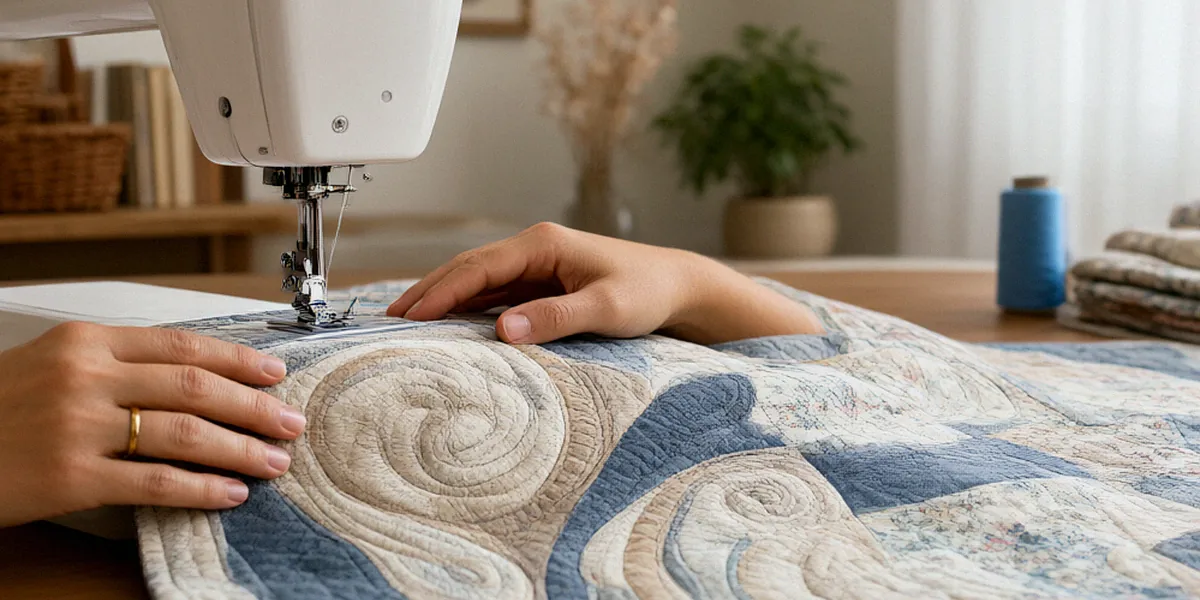
Most Canadian quilters do not have room for a longarm, and that is completely fine. A domestic machine — whether it is a Bernina, a Janome, or a Brother — can handle free-motion quilting beautifully once you understand a few basics. The appeal is simple: you finish your quilts at home, on your own schedule, without paying someone else or waiting weeks for a longarm quilter. You also get full creative control over every swirl, loop, and stipple.
Benefits of Free-Motion Quilting
- Complete creative control over quilting designs and density
- No waiting lists or shipping costs to a longarm quilter
- Works on almost any modern domestic machine with the right foot
- Builds confidence and skill that carries into every future project
- Perfect for small to medium quilts, wall hangings, and quilted gifts
When to Choose a Domestic Machine Over a Longarm
If your quilt is larger than a throw, or you want an all-over edge-to-edge design with zero wrestling, a longarm may still be the better call. But for baby quilts, wall hangings, table runners, and anything up to a twin size, a domestic machine is more than capable. Many of us quilt in the evenings at the kitchen table, and that flexibility is worth a lot. Canadian winters also mean we are indoors more, which makes winter the perfect season to build free-motion skills.
Setting Up Your Domestic Machine for Free-Motion Quilting
Setup is where most frustration begins. Get this right, and free-motion quilting feels dramatically easier. We have bought machines and accessories from Canadian retailers like The Sewing Machine Store in Ontario, which carries Bernina, Janome, and Brother models and is a great resource if you want to test a machine before buying.
Essential Feet and Accessories
You need a darning foot or free-motion quilting foot. This foot hops over the fabric as you stitch and prevents the quilt from lifting with the needle. You also need to lower your feed dogs so you control the fabric movement, not the machine. Extension tables and slider mats make a huge difference in managing bulk.
Tension and Stitch Length Settings
Start with your stitch length at zero, since you are moving the fabric yourself. For tension, aim for a balanced stitch where the top and bobbin threads meet in the middle of the quilt sandwich. Canadian winters can affect thread tension and fabric moisture, so if your thread is snapping or your stitches look loose, try adjusting your top tension slightly and running a humidifier in your sewing space. Dry indoor air in January can absolutely change how your machine behaves.
Choosing the Right Thread and Needles
We generally use 40-weight or 50-weight cotton thread for free-motion quilting, and a fresh 80/12 or 90/14 quilting needle. Change your needle every project or two — a dull needle causes skipped stitches and thread breaks faster than almost anything else.
Core Free-Motion Quilting Techniques
Every free-motion design is built from a handful of basic motifs. Practice them on small quilt sandwiches made from scrap fabric. Fabricland, the Canadian fabric store chain with locations across the country, is a great place to pick up inexpensive practice fabric and batting remnants.
Stippling and Meandering
Stippling is a dense, puzzle-piece design that fills space evenly. Meandering is a larger, looser version of the same idea. Both are forgiving for beginners because there is no “right” shape — you just keep the lines from crossing.
Loops and Swirls
Loops and swirls add movement and elegance. Start with simple loops in a row, then try swirling them into each other. This motif looks impressive but is genuinely easy once your hands relax.
Travel Stitching and Knots
Travel stitching means stitching directly on top of a previous line to move to a new area without tying off. For knots, we bury our thread tails using a self-threading needle rather than knotting on the surface, which keeps the quilt back looking clean.
Troubleshooting Common Free-Motion Quilting Problems
Every free-motion quilter hits these issues. The good news is that most have simple fixes.
Tension Troubles
If your bobbin thread is pulling to the top, your top tension is too tight. If loops appear on the back, your top tension is too loose. Re-thread with the presser foot up, clean your bobbin area, and remember that humidity swings in Canada — dry winters and humid summers — can shift your tension needs seasonally.
Skipped Stitches and Needle Breaks
Skipped stitches usually mean a dull or wrong-sized needle, or that your feed dogs are still up. Needle breaks often come from pulling the fabric too fast while the needle is down. Slow your hands and let the machine keep pace.
Managing Quilt Drag and Bulk
Roll or fold your quilt so only the area under the needle is flat. Quilting gloves give you grip and reduce hand fatigue. An extension table supports the weight so you are not fighting gravity with every stitch.
Our Favourite Tools and Resources for Canadian Quilters
We have tested a lot of gear over the years, and these are the items and communities we keep coming back to.
Must-Have Tools
- Quilting gloves with rubberized fingertips for grip
- An extension table or sewing machine cabinet insert
- A slider mat or silicone spray to reduce drag
- Self-threading needles for burying knots
- A good task light and an ergonomic seat
Online Courses and Canadian Guilds
The Canadian Quilters’ Association (CQA) offers resources and community for free-motion quilting, including workshops and connections to local guilds across the country. Online platforms like Quilting Daily have excellent video courses, and Canadian quilters like Cheryl Arkison — a renowned Canadian quilter and author known for her free-motion quilting designs — are wonderful teachers to learn from.
Practice Projects to Build Your Skills
The fastest way to improve is to quilt small, finish often, and celebrate progress. Small projects give you quick wins and let you experiment without risking a large quilt.
Small Projects for Beginners
Mug rugs, potholders, and small table runners are perfect first free-motion projects. They are small enough to manage easily and finish in an afternoon.
Intermediate Quilts to Try
Once you are comfortable, move to baby quilts and lap quilts. Cheryl Arkison’s patterns are a fantastic next step because they are designed to showcase quilting rather than hide it. Try a simple whole-cloth quilt with an all-over meander to really build muscle memory.
FAQ
Do I need a special machine for free-motion quilting?
No. Any domestic machine with the ability to lower its feed dogs and use a darning or free-motion foot will work. Bernina, Janome, and Brother machines are all popular choices among Canadian quilters.
How often should I change my needle for free-motion quilting?
We change our needle every project, or every eight to ten hours of quilting. A fresh needle prevents skipped stitches and thread breaks.
Why does my thread keep breaking in winter?
Canadian winters can affect thread tension and fabric moisture. Dry indoor air makes thread brittle, so try a humidifier, adjust your top tension, and consider a thread stand to reduce tension spikes.
Where can I find free-motion quilting classes in Canada?
The Canadian Quilters’ Association (CQA) is a great starting point, and many local guilds offer in-person workshops. Online options like Quilting Daily also work well for self-paced learning.
What is the best fabric for practicing free-motion quilting?
Use inexpensive cotton scraps and leftover batting. Fabricland locations across Canada are a convenient source for affordable practice fabric and batting remnants.
Free-motion quilting is a learnable skill, not a talent you are born with. Every quilter we know started with wobbly stitches and tight shoulders. With a properly set-up machine, a few core motifs, and regular practice on small projects, you will be quilting your own finishes in no time. Embrace the journey, Canadian quilters — your next quilt is waiting.