
Caring for and Washing Handmade Quilts: A Canadian Guide
We still remember the first time we washed a handmade quilt. It was a queen-size log cabin quilt we’d spent three months piecing, and we tossed it into the machine on a whim with our regular detergent. The colours ran, the batting shifted, and one corner seam popped open. That afternoon taught us more about quilt care than any book could, and it’s why we now treat every wash like a small project. Whether you’re caring for your first quilt or your fiftieth, this guide walks through everything we’ve learned about keeping handmade quilts beautiful for decades.
Understanding Your Quilt’s Materials
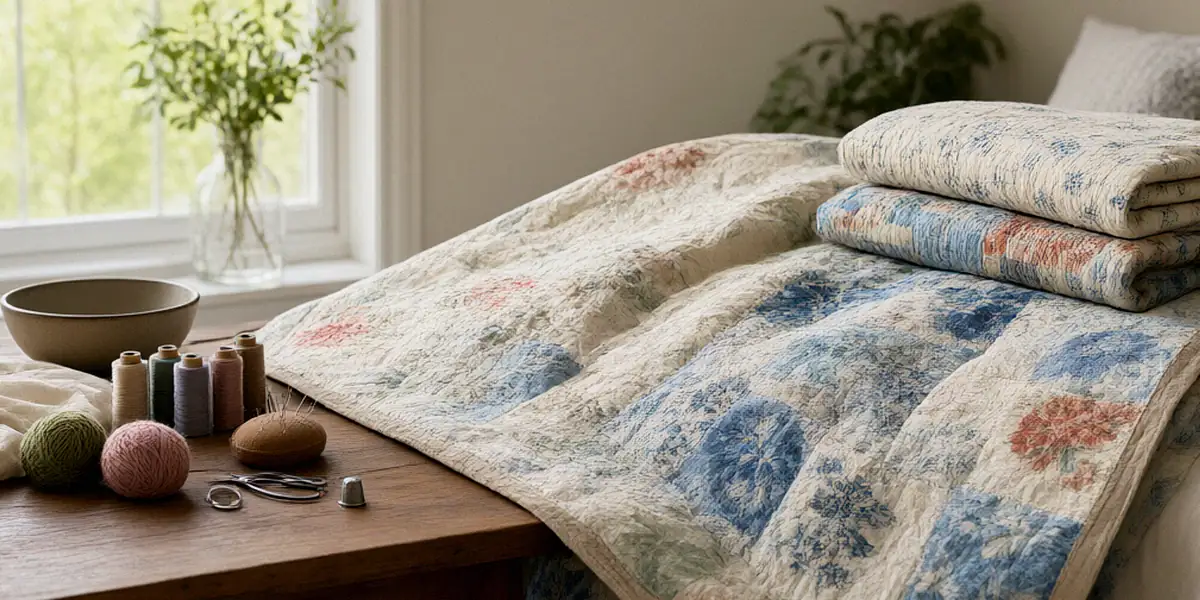
Before any quilt touches water, it helps to know what it’s made of. Fabric, batting, and thread all behave differently, and what works for one quilt can ruin another. In Canada, we often work with a mix of imported and domestic materials, so knowing your specific combination matters.
Fabric Types and Pre-Washing
Quilting cotton is the most common choice and generally washes well, but it can shrink up to 3–5% on the first wash. If you pre-washed your fabric before piecing, you’ve already dealt with most shrinkage. If not, expect some crinkle — which many of us actually love. Flannel, linen, and batiks each have their own quirks; batiks tend to bleed more, while linen softens beautifully with each wash. Always check the fabric content before washing the finished quilt.
Batting Choices and Their Care
Batting is where many quilters get tripped up. Cotton batting like Warm & Natural gives that traditional flat, antique look but can beard through fabric over time. Wool batting, such as Hobbs Heirloom Wool, is warm and lofty but requires gentler handling to avoid felting. Bamboo batting drapes beautifully and is naturally antimicrobial, but it’s more delicate in the wash. Warm & Natural and Hobbs are two of the most popular batting brands in Canada, and both publish care guidelines worth reading before you wash.
Thread and Embellishments
Polyester thread holds up well to washing, while cotton thread can fade or weaken over many cycles. If your quilt includes beads, buttons, embroidery, or appliqué with fusible web, hand washing is almost always the safer route. Check every embellishment with a gentle tug before washing to make sure nothing is about to fall off.
Preparing Your Quilt for Washing
Preparation is where most quilt disasters are prevented. Ten minutes of inspection can save you hours of repair later.
Inspecting for Damage
Lay the quilt flat and run your hands over the surface, looking for loose threads, open seams, and worn spots. Pay special attention to binding edges and any areas where quilting lines are dense. If you spot a seam pulling apart, fix it before washing — water and agitation will only make it worse.
Testing for Colorfastness
Even fabrics that look stable can bleed. Test by dampening a hidden corner with cool water and pressing a white cloth against it. If colour transfers, treat the quilt with a colour catcher before washing. Retayne and Synthrapol are available at Canadian quilt shops and are the go-to products for setting dyes and suspending loose dye in the wash water. Retayne is used before washing to bond dye to fibre; Synthrapol is added to the wash to keep released dye from redepositing.
Making Repairs Before Washing
Reinforce loose binding with a few hand stitches, re-secure any quilting stitches that have come undone, and snip stray threads rather than pulling them. Small repairs now prevent larger restoration projects later.
Hand Washing vs. Machine Washing
The right method depends on the quilt’s age, materials, and construction. As a general rule, the older and more delicate the quilt, the more we lean toward hand washing.
Hand Washing Step-by-Step
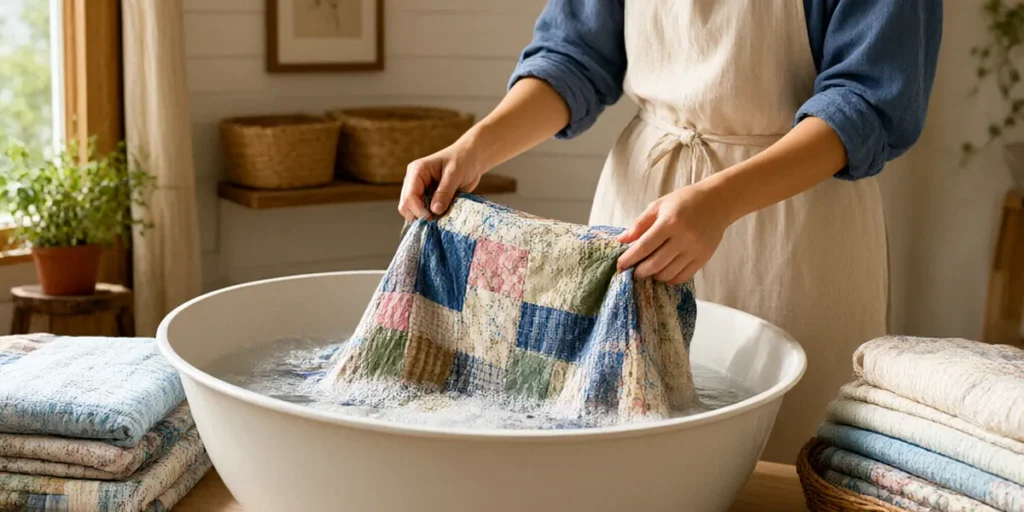
- Fill a bathtub or large basin with cool water and a small amount of gentle detergent such as Orvus Paste, which is widely recommended for quilts.
- Submerge the quilt and gently press it down; never wring or scrub.
- Soak for 10–15 minutes, then drain and refill with clean cool water.
- Repeat rinsing until the water runs clear.
- Press water out by rolling the quilt in a clean towel — never twist or lift a soaked quilt by one corner.
Machine Washing Guidelines
Newer, well-constructed quilts with secure stitching can usually handle a front-loading machine on a gentle or hand-wash cycle with cold water and low spin. Top-loaders with agitators are riskier because the central agitator can distort quilting. If you’re unsure, place the quilt inside a clean white pillowcase or duvet cover to reduce friction.
Choosing the Right Detergent
Skip anything with bleach, brighteners, or enzymes. Orvus Paste is a favourite among Canadian quilters because it’s pH-neutral and rinses clean. Mild liquid soaps formulated for delicate fabrics also work well. Use less than you think you need — residue attracts dirt and can yellow fabric over time.
Drying and Finishing Techniques
How you dry a quilt matters as much as how you wash it. Canadian winters require indoor drying to prevent freezing damage, since a wet quilt left outside in sub-zero temperatures can develop ice crystals that crack fibres and weaken stitching.
Air Drying Methods
Lay the quilt flat on clean sheets or a drying rack, reshaping it as it dries. Avoid hanging a wet quilt over a clothesline by its edges, which stresses the binding. If you must hang, drape it over two parallel lines to distribute the weight.
Using a Dryer Safely
A low-heat dryer on an air-fluff or delicate setting can work for sturdy cotton quilts and actually helps loft the batting. Add a couple of clean tennis balls or wool dryer balls to keep the quilt moving. Never use high heat — it can shrink batting, melt polyester thread, and set stains.
Blocking and Shaping
While the quilt is still slightly damp, lay it flat and gently square up the corners. Some quilters pin the edges to a blocking board to encourage straight lines. This step is especially helpful for wall hangings and show quilts.
Storing Quilts to Preserve Heirlooms
Proper storage is the difference between a quilt that lasts 30 years and one that lasts 100. The Canadian Quilters’ Association (CQA) offers resources on quilt care that we recommend to anyone serious about preservation.
Long-Term Storage Solutions
- Wrap quilts in acid-free tissue or washed cotton muslin.
- Avoid plastic bins, which trap moisture and can cause mildew.
- Use cotton pillowcases or archival boxes instead.
- Store in a cool, dry place away from direct sunlight.
- Never store quilts in a damp basement or humid attic.
Displaying Quilts Without Damage
If you hang a quilt, use a wide sleeve sewn to the back rather than pins or nails. Rotate the hanging direction periodically so stress isn’t concentrated along one edge. Keep displayed quilts out of direct sun to prevent fading.
Rotating and Refolding
Fold quilts differently every few months to prevent permanent crease lines. Stuffing folds with crumpled acid-free tissue helps too. This simple habit dramatically extends a quilt’s life.
Special Care for Free-Motion Quilting and Antique Quilts
Free-motion quilting creates dense, textured designs that are gorgeous but can be more vulnerable to distortion during washing. Antique quilts bring their own set of challenges, and both deserve extra attention.
Caring for Free-Motion Quilted Designs
Dense free-motion stitching can pull fabric in ways that become more pronounced after washing. Always use cold water and minimal agitation, and lay the quilt flat to dry so the stitching can relax back into shape. If the quilt has heavy thread painting or metallic threads, hand washing is the safest choice.
Handling Antique and Vintage Quilts
Quilts made before 1950 often have fragile fabrics, unstable dyes, and cotton thread that has weakened with age. We recommend consulting the Canadian Quilters’ Association for guidance and, when in doubt, contacting a textile conservator. Never machine wash an antique quilt unless a professional has confirmed it’s safe.
When to Seek Professional Help
If a quilt has significant staining, mould, insect damage, or sentimental value, professional textile conservation is worth the investment. Many Canadian museums and quilt guilds can recommend trusted conservators in your region.
FAQ
How often should I wash a handmade quilt?
Only when it actually needs it. Everyday quilts used on beds might be washed once or twice a year; display quilts may go years without washing. Spot clean between washes whenever possible.
Can I use regular laundry detergent on my quilt?
We don’t recommend it. Regular detergents often contain brighteners, enzymes, and fragrances that leave residue and can damage fibres. Use Orvus Paste or a pH-neutral quilt detergent instead.
What temperature water is safe for washing quilts?
Cold water is always safest. It reduces shrinkage, minimizes dye bleeding, and is gentler on batting and thread.
How do I dry a quilt in a Canadian winter?
Dry it indoors, laid flat on a rack or clean sheets. Never hang a wet quilt outside in freezing temperatures, as ice crystals can damage fibres and stitching.
Where can I find quilt care resources in Canada?
The Canadian Quilters’ Association (CQA) publishes care guides, and most local quilt shops carry products like Retayne, Synthrapol, and Orvus Paste along with advice from staff who quilt themselves.
With the right materials knowledge, a careful pre-wash routine, and a little patience, handmade quilts can be enjoyed for generations. We’ve watched quilts our grandmothers made survive decades of use because someone took the time to wash and store them properly. If you’ve got a quilt care tip or a washing story of your own, we’d love to hear it in the comments — Canadian quilters learn best from each other.