
Joining a Quilt Guild in Canada: What We Wish We Knew Sooner
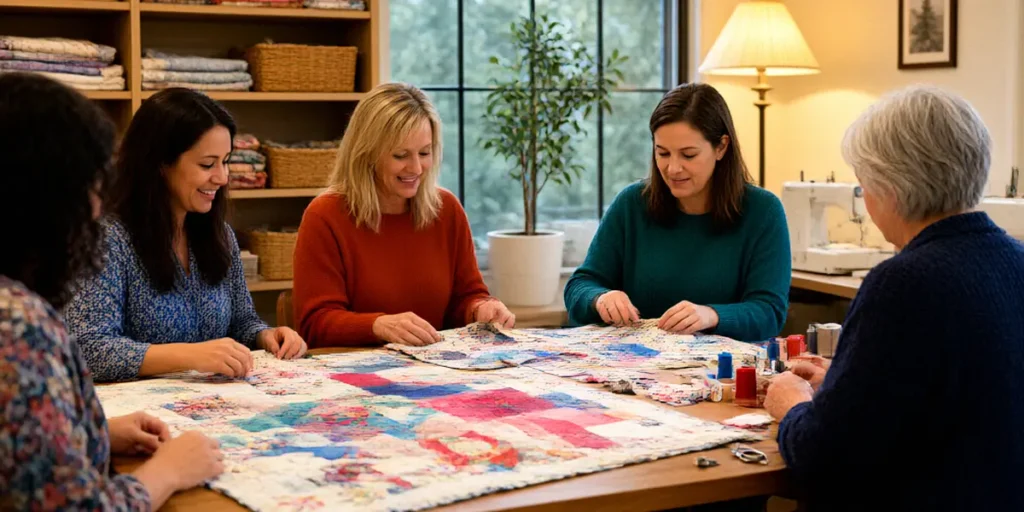
We still remember walking into our first guild meeting with a half-finished quilt under one arm and absolutely no idea what to expect. Within ten minutes, someone had handed us a name tag, someone else had offered us tea, and a woman named Barb was already explaining why our seam allowances were probably the reason our blocks didn’t line up. That first meeting turned into a decade of friendships, road trips to quilt shows, and more free-motion quilting tips than we could ever fit in a notebook. If you’ve been quilting solo and wondering whether a guild is worth it, here’s everything we wish someone had told us sooner.
Why Join a Quilt Guild? The Benefits for Canadian Quilters
Quilting can be a solitary hobby — just you, your machine, and a growing pile of fabric. A guild changes that entirely. Across Canada, guilds run workshops, monthly challenges, and group quilting projects that push your skills further than you’d push them alone. They’re also one of the cheapest ways to learn, since most guilds bring in guest instructors at a fraction of what a standalone class would cost.
Learning New Techniques and Quilt Patterns
Guild programming is built around skill-building. One month might be a paper-piecing demo, the next a trunk show from a local longarmer. We’ve picked up more practical free-motion quilting tricks from guild demos than from any online course — things like how to adjust tension for different thread weights, or which quilt patterns work best for a walking foot versus a darning foot. Many guilds also run block-of-the-month programs, which are a low-pressure way to try new quilt patterns without committing to a full project.
Building a Supportive Quilting Community
This is the part nobody warns you about: guilds become a social lifeline. When we were stuck on a colour palette for a wedding quilt, we brought it to show-and-tell and got six opinions in five minutes. When a member’s sewing machine broke mid-project, three people offered to lend her a spare. That kind of generosity is standard in Canadian guilds, and it’s the reason so many members stay for decades.
Access to Exclusive Resources and Discounts
Guild membership often comes with perks you can’t get elsewhere:
- Discounted rates at guild-run workshops and retreats
- Group discounts at local quilt shops, sometimes including Fabricland locations
- Access to a guild library of books, rulers, and specialty templates
- Early registration for quilt shows and challenges
- Member-only newsletters with free quilt patterns
How to Find a Quilt Guild Near You in Canada
Canada has hundreds of guilds, from tiny rural groups meeting in church basements to large urban guilds with hundreds of members. Finding one near you takes about fifteen minutes of searching.
Using the CQA/ACC Guild Directory
Start with the Canadian Quilters’ Association (CQA/ACC) guild directory. It’s the most comprehensive list of Canadian guilds, organized by province, and it includes contact information and meeting details. If you’re in a remote area, the directory is also the best place to find guilds that offer virtual meetings.
Asking at Local Quilt Shops
Walk into any quilt shop and ask at the counter — staff almost always know which guilds meet nearby. Fabricland stores across Canada are another good option, especially in smaller towns where the local Fabricland is the hub for the quilting community. Employees there can usually point you toward the closest guild or a drop-in sewing group.
Online Communities and Social Media
Forums like Quilting Board, plus Facebook groups dedicated to Canadian quilters, are goldmines for guild recommendations. Search for your city or province plus “quilt guild,” or post a question asking for suggestions. You’ll often get responses within a day, including notes on which guilds are welcoming to beginners.
What to Expect at Your First Guild Meeting
Every guild runs things a little differently, but most Canadian guild meetings follow a similar rhythm. Expect a social hour at the start — coffee, cookies, and people wandering between tables to admire each other’s work. New members are usually introduced and welcomed, sometimes with a small gift or a “buddy” assigned to show them the ropes.
Show-and-Tell and Inspiration
Show-and-tell is the heart of most meetings. Members bring finished quilts, works in progress, and occasionally spectacular failures, all of which get applause. It’s the fastest way to see new quilt patterns in person and get honest feedback on your own work.
Guest Speakers and Demonstrations
Most guilds book guest speakers several times a year — quilt artists, authors, longarm specialists, and fabric designers. These presentations often include live demos of techniques like free-motion quilting, appliqué, or foundation piecing.
Workshops and Retreats
Beyond the monthly meeting, guilds typically run full-day workshops and weekend retreats. Retreats are where the real magic happens: you sew for two or three days straight, eat too much, and come home with a finished quilt top and five new friends.
Types of Guilds: General, Art Quilt, and Modern Quilt Guilds
Not all guilds are the same. Before you commit, figure out which flavour suits your quilting style.
General Quilt Guilds
These are the traditional, all-purpose guilds. Members work in every style — traditional, scrappy, appliqué, art — and programming covers a broad range of techniques. If you’re new to quilting or want variety, a general guild is usually the best starting point.
Art Quilt Guilds
Art quilt groups focus on original design, surface design, dyeing, and mixed media. They tend to be smaller and more critique-oriented. If you’re interested in exhibition work or pushing past traditional quilt patterns, this is your crowd.
Modern Quilt Guilds
The Modern Quilt Guild has chapters across Canada, including the Toronto Modern Quilt Guild. Modern guilds emphasize improvisational piecing, bold colour, negative space, and minimalist design. They tend to attract younger quilters and often have a strong online presence, which makes them easy to join even if you can’t attend every meeting in person.
Membership Costs and Commitments: What You Need to Know
Guild membership is one of the best-value hobbies you’ll ever pay for. Here’s the realistic breakdown.
Annual Dues and Fees
Annual membership fees typically range from $30 to $60, depending on the guild’s size and programming. Some larger guilds charge slightly more; small rural guilds sometimes charge less. Most also offer a reduced drop-in fee if you want to try a meeting before committing.
Meeting Frequency and Location
Most guilds meet once a month, usually in the evening, at community halls, churches, libraries, or quilt shops. Many guilds now offer virtual meetings for remote members, which is a huge win for quilters in rural or northern communities. Some hybrid guilds run in-person meetings with a Zoom option so nobody gets left out.
Volunteer Opportunities and Responsibilities
Guilds run on volunteers. You won’t be pressured into a big role on day one, but expect to be invited to help with things like:
- Sitting on the program or workshop committee
- Helping at the guild’s quilt show or fundraiser
- Coordinating charity quilt projects
- Bringing snacks or setting up chairs for meetings
Making the Most of Your Guild Experience
Joining is step one. Getting involved is what turns a membership into a quilting community.
Participate in Challenges and Exchanges
Guild challenges — themed quilts, colour challenges, mini quilt swaps — are the fastest way to stretch your skills. They also give you something to show at the next meeting, which is how you start building relationships with other members.
Attend Retreats and Workshops
Say yes to retreats, even if you feel like a beginner. You’ll learn more in one weekend of communal sewing than in months of solo practice, and the informal teaching that happens around the ironing board is priceless.
Volunteer for Guild Roles
Take on a small role in your first year — maybe helping with the newsletter or greeting new members. It’s the quickest way to get to know people, and it makes the guild feel like yours.
FAQ
Do I need to be an experienced quilter to join a guild?
Not at all. Most Canadian guilds welcome complete beginners, and many run beginner-friendly workshops and mentoring programs. If you can sew a straight seam, you’ll fit right in.
How much does guild membership cost in Canada?
Annual membership fees typically range from $30 to $60. Some guilds also charge a small drop-in fee for guests, usually $5 to $10 per meeting.
Can I join a guild if I live in a remote area?
Yes. Many guilds offer virtual meetings for remote members, and the Canadian Quilters’ Association (CQA/ACC) guild directory is a good place to find them. You can also join online-only guilds or the Modern Quilt Guild’s virtual programming.
What should I bring to my first guild meeting?
Bring a name tag, a small show-and-tell item if you have one, and cash for the drop-in fee or raffle tickets. A notebook is handy for jotting down techniques and quilt patterns you want to try.
Are guilds only for traditional quilters?
No. General guilds cover all styles, and there are dedicated art quilt and modern quilt guilds — including Canadian chapters like the Toronto Modern Quilt Guild — for quilters who work in more contemporary styles.
Joining a quilt guild is one of those decisions that quietly reshapes your quilting life. You’ll learn faster, sew more, and end up with a circle of friends who understand exactly why you own four rotary cutters and 300 fat quarters. Find a guild near you, show up to one meeting, and see what happens. We promise you won’t regret it.