
Modern Quilting vs Traditional: What’s the Difference?
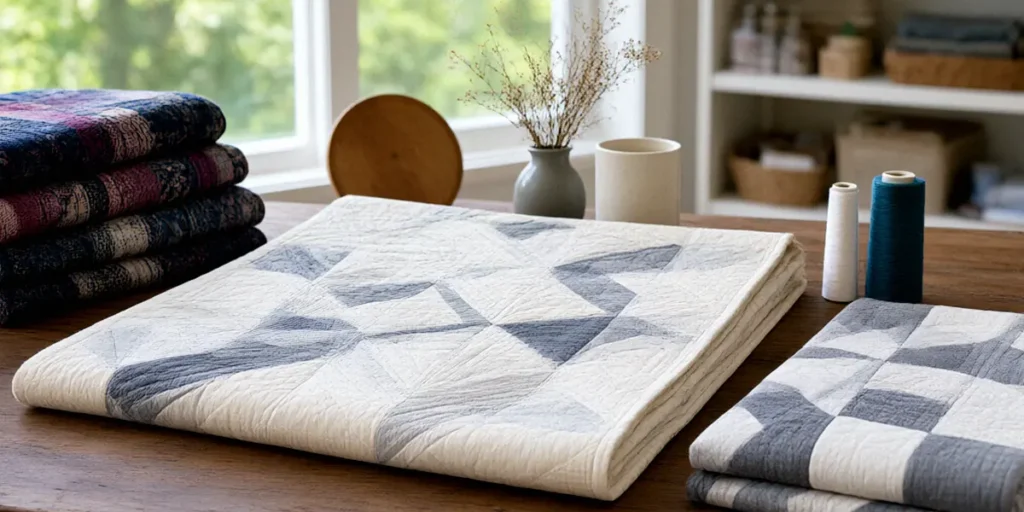
At our last guild meeting in Toronto, we nearly ran out of chairs because a simple question turned into a two-hour debate: is this quilt modern or traditional? One of our members held up a crisp, asymmetrical quilt made almost entirely of grey and white solids, and half the room called it modern while the other half insisted the underlying block structure was as old as quilting itself. We went home that night realizing that the line between modern and traditional quilting is blurrier than most of us admit — and that understanding both styles makes us better quilters. So here’s our breakdown of what actually separates the two, from fabric choices to free-motion quilting techniques, and why Canadian quilters in particular seem to thrive somewhere in the middle.
What Is Traditional Quilting?
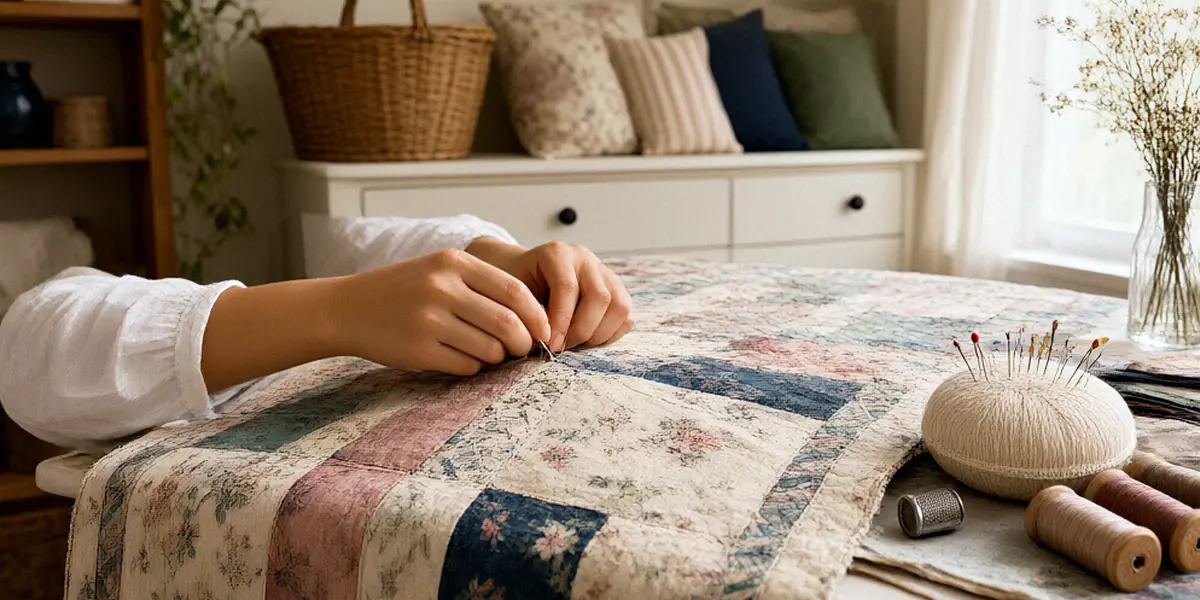
Traditional quilting is the lineage most of us inherited. It emphasizes symmetry, repetition, and classic block patterns that have been passed down for generations — think Log Cabin, Dresden Plate, Flying Geese, and Nine Patch. Traditional quilts are usually built on a grid, with blocks repeated in balanced layouts, and they often use reproduction fabrics that echo the prints of the 1800s and early 1900s. Moda Fabrics has built much of its reputation on these reproduction lines, and for good reason: their colour stories feel authentically vintage without looking dusty.
Key Characteristics of Traditional Quilts
- Symmetrical, grid-based layouts with repeated blocks
- Classic patterns such as Log Cabin, Dresden Plate, Bear Paw, and Double Wedding Ring
- Reproduction or period-inspired prints, often from brands like Moda Fabrics
- Borders, sashing, and cornerstones that frame the quilt top
- Frequent use of hand quilting or stencil-guided machine quilting
Popular Traditional Patterns and Their Origins
The Log Cabin block is often traced to early American quilting, with its central “hearth” square and strips representing logs built outward. The Dresden Plate, with its radiating blades, became wildly popular in the 1920s and 1930s, and it’s still one of the most requested patterns in our workshops. The Nine Patch is even older, appearing in quilts from the early 1800s, and it remains the block we recommend to anyone learning to piece accurately. What ties these patterns together is their structure — they reward patience, precision, and repetition, which is exactly what draws so many traditional quilters to them.
What Is Modern Quilting?
Modern quilting grew out of a desire to break the grid. It focuses on minimalism, asymmetry, bold colour, and generous negative space. The movement gained real momentum with the founding of the Modern Quilt Guild in 2009, which gave quilters across North America — including a strong contingent here in Canada — a shared identity and language. Where traditional quilting repeats, modern quilting often isolates a single bold shape and lets it breathe.
Defining Features of Modern Quilts
- Asymmetrical or improvisational layouts
- Large areas of negative space, often quilted with dense texture
- Solid fabrics and limited colour palettes
- Oversized blocks and graphic, minimalist shapes
- Machine quilting, especially straight-line walking-foot work
How Modern Quilting Diverges from Tradition
The clearest divergence is intent. Traditional quilting often aims for balance and symmetry, while modern quilting deliberately unsettles the eye with off-centre compositions and unexpected scale. Modern quilters also tend to treat quilting itself as a design element rather than a finishing step — the stitch lines become part of the composition. That said, plenty of modern quilts still use traditional blocks. A Log Cabin block set off-centre in a sea of white is modern in execution but traditional in origin, and that overlap is exactly what makes the debate at our guild meeting so lively.
Fabric Choices: From Reproduction Prints to Solids
Fabric is where the two styles diverge most visibly. Walk into any quilt shop in Canada and you can usually guess a quilter’s leaning by which wall they gravitate toward first.
Traditional Fabric Selections
Traditional quilters often reach for Civil War-era reproduction fabrics from Windham Fabrics, along with period prints from Moda Fabrics. These fabrics carry small-scale florals, shirtings, and muted indigos, cheddars, and madder reds. The goal is cohesion — a quilt that looks like it could have been made a century ago, even if it was finished last weekend.
Modern Fabric Trends
Modern quilters lean heavily on solids. Kona Cotton by Robert Kaufman is a popular solid fabric for modern quilters, and Paintbrush Studio Fabrics offers a similar range with a slightly softer hand. Beyond solids, modern quilters gravitate toward low-volume prints, geometrics, and bold blenders. The palette tends toward high contrast: think charcoal, white, mustard, and teal in the same quilt, with no attempt to make the prints “match” in the traditional sense.
Techniques and Tools: Free-Motion Quilting and Beyond
Here’s something worth saying plainly: free-motion quilting is used in both modern and traditional quilting. It’s a technique, not a style. What changes is how and where it’s applied.
Free-Motion Quilting in Modern and Traditional Contexts
Traditional quilters often use free-motion quilting to fill defined spaces — feathers in a border, crosshatching in sashing, or a stencil-guided motif in each block. Modern quilters tend to use it more freely across negative space, filling large open areas with organic texture like pebbles, swirls, or matchstick lines. Both approaches require the same core skill: controlling stitch length and speed without the feed dogs engaged.
Hand Quilting vs Machine Quilting
Hand quilting remains a hallmark of traditional work, often guided by stencils from The Stencil Company to mark consistent designs across the quilt top. Many traditional quilters use a walking foot for straight-line work and reserve hand quilting for heirloom pieces. Modern quilters, by contrast, frequently choose walking-foot quilting with straight lines — sometimes an all-over grid, sometimes radiating lines that echo a shape in the piecing. Neither method is superior; they simply serve different design goals.
Canadian Quilters: Embracing Both Worlds
If there’s one thing we’ve noticed writing for Canadian quilters, it’s that most of us refuse to pick a side. From Vancouver to Halifax, quilters are blending modern colour choices with traditional block construction, or taking a classic Dresden Plate and setting it in an improvisational layout.
Regional Influences on Quilting Styles
Geography plays a bigger role than you might expect. Quilters on the Prairies often lean toward warm, high-contrast palettes that stand out against long winters, while coastal quilters in British Columbia and the Maritimes tend to favour cooler blues, greens, and greys. Rural guilds often carry stronger traditional lineages, while urban guilds in Toronto, Montreal, and Vancouver tend to have larger modern contingents.
How Canadian Quilters Mix Modern and Traditional
The Canadian Quilters’ Association hosts the annual Quilt Canada conference, and if you’ve ever walked its show floor, you’ve seen the blend firsthand: a hand-quilted reproduction sampler hanging three quilts away from an improv curves piece in Kona solids. Many of our readers tell us they started traditional, discovered modern quilting through Instagram, and now move between both depending on the project. That flexibility is a strength, not indecision.
Which Style Is Right for You?
We’ve debated this among ourselves, and our team is genuinely split. Two of us are traditionalists who love the rhythm of hand quilting a repeated block. Two of us are solid-fabric maximalists who haven’t bought a floral print in years. The honest answer is that the style that fits you is the one that keeps you at the sewing machine.
Assessing Your Quilting Personality
- Do you enjoy repetition and precision, or improvisation and surprise?
- Do you gravitate toward matching prints or high-contrast solids?
- Do you want a pattern to follow exactly, or a framework to break?
- Do you prefer the texture of hand quilting or the speed of machine quilting?
Tips for Beginners Trying Both Styles
Start with a small project in each style. A Nine Patch table runner teaches accurate piecing and basic free-motion quilting, while an improv log cabin cushion cover teaches colour confidence and negative space. Don’t buy an entire fabric collection before you know what you like — pick up a few fat quarters of Kona Cotton and a couple of reproduction prints from Moda Fabrics, and see which one you reach for first. Take a class at your local guild, and if you can, attend a Quilt Canada conference to see both styles side by side.
FAQ
Is modern quilting just traditional quilting with different colours?
Not quite. Colour is part of it, but the bigger differences are in layout, scale, and intent. Modern quilting tends toward asymmetry, negative space, and graphic minimalism, while traditional quilting emphasizes symmetry and repeated blocks. That said, many modern quilts still use traditional blocks as their starting point.
Can I use free-motion quilting on a traditional quilt?
Absolutely. Free-motion quilting is used in both modern and traditional quilting. Traditional quilters often use it to fill defined spaces like borders and sashing, while modern quilters apply it across large areas of negative space. The technique is the same — only the application differs.
What fabric should a beginner buy first?
We suggest starting with a few solid fat quarters, such as Kona Cotton by Robert Kaufman, plus two or three reproduction prints from Moda Fabrics. That gives you enough range to try both a modern and a traditional project without committing to a full collection.
Do Canadian quilters prefer one style over the other?
From what we see, Canadian quilters blend both. Guilds across the country host traditional and modern workshops, and the Canadian Quilters’ Association’s annual Quilt Canada conference showcases work from both camps. Regional preferences exist, but most quilters we know move between styles depending on the project.
When was the Modern Quilt Guild founded?
The Modern Quilt Guild was founded in 2009. It helped formalize modern quilting as a distinct movement and gave quilters across North America — including many Canadian guilds — a shared community and set of design principles.
Modern and traditional quilting aren’t opposing teams, and the guild meeting debate that started this article never really ended — which is exactly the point. Traditional quilting gives us structure, history, and patterns refined over generations. Modern quilting gives us permission to break the grid, play with solids, and treat quilting lines as design. As Canadian quilters, we’re lucky to have both traditions available to us, and the most interesting work often happens when we stop choosing sides and start blending techniques to create something uniquely ours.