
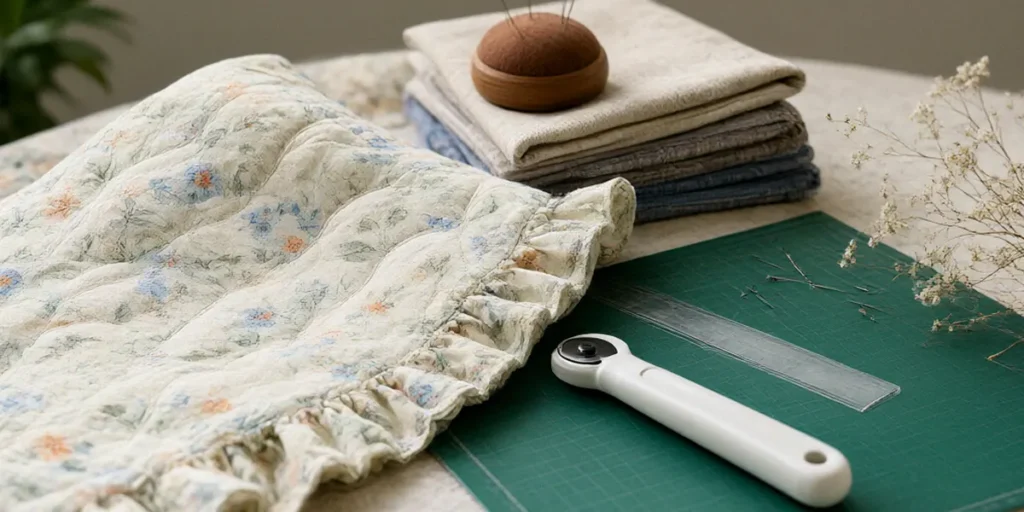
Reviewing a Quilt Pattern: What to Look For Before You Sew
You’ve just spotted it — the perfect quilt pattern. The photo shows crisp half-square triangles, a colour palette that makes you think of a Nova Scotia autumn, and a design that would look stunning on your guest bed. You add it to your cart, wait for the download, print it out… and then the disappointment hits. The cutting chart doesn’t add up. The diagrams are blurry. The “beginner-friendly” label is a stretch, to put it mildly. We’ve all been there, and that’s exactly why a careful pattern review before you buy — or before you cut into your good fabric — is one of the smartest habits a quilter can build.
Why Pattern Reviews Matter for Canadian Quilters
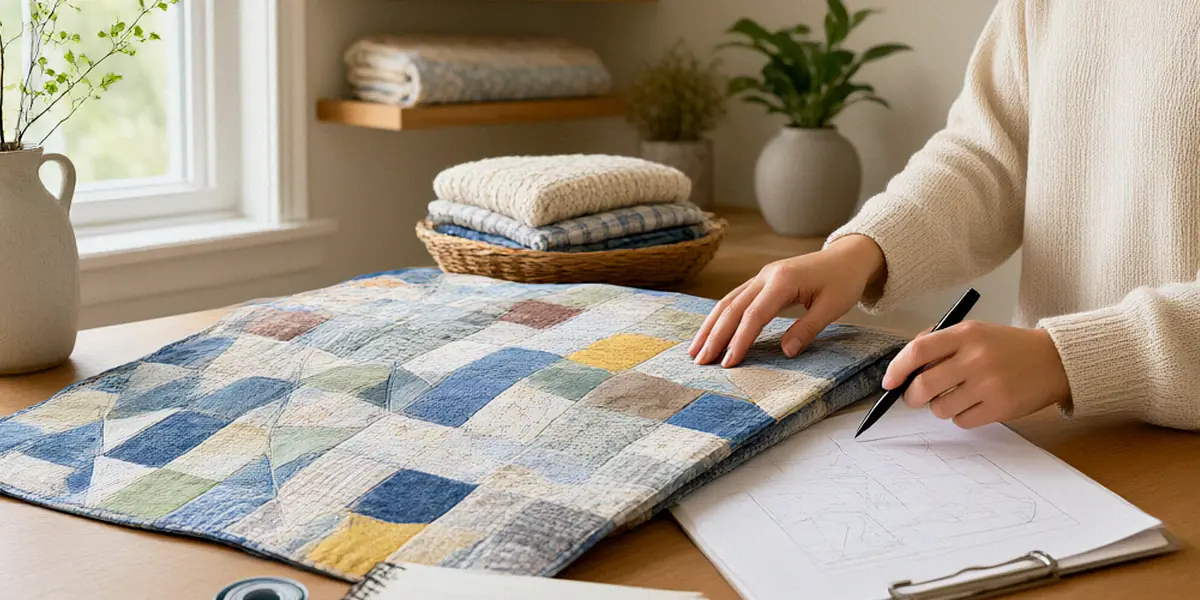
Not all quilt patterns are created equal. Some are meticulously tested, tech-edited, and updated with errata when issues surface. Others are dashed off in an afternoon and uploaded with little more than a cover photo. A thoughtful review saves you time, fabric, and a whole lot of seam ripping. That matters even more for Canadian quilters, who often order patterns online from Etsy, Craftsy, or Canadian shops like The Quilting Bee in Ontario. When a pattern arrives from a distance, returning it isn’t always practical — so doing your homework first is essential.
The Cost of a Bad Pattern
A poorly written pattern costs more than the $12 download fee. It costs the fabric you’ve already cut incorrectly, the hours spent unpicking, and the momentum you lose on a project you were excited about. Canadian quilters often face higher shipping costs when ordering patterns from the US, which means a disappointing pattern stings twice — you paid more to get it, and you may not want to pay again to replace it.
Supporting Canadian Designers
One of the best ways to reduce risk is to buy from designers with a track record you can verify. Canadian designers are increasingly visible in the quilting world, and supporting them often means shorter shipping times, prices in Canadian dollars, and patterns written with our fabric landscape in mind. When we review patterns, we make a point of noting whether the designer is Canadian and whether their patterns are stocked in Canadian shops.
Key Elements to Check in a Quilt Pattern
Whether you’re browsing a pattern from a big-name brand like Cluck Cluck Sew or Missouri Star Quilt Co. — both of which tend to set a high standard for clarity — or from an independent designer on Etsy, the same core elements should be present. If any of these are missing or vague, treat it as a warning sign.
Clarity of Instructions and Diagrams
Good instructions read like a conversation with a patient teacher. They tell you what to do, in what order, and why. Diagrams should be large enough to actually see, with clear labels and arrows. If a pattern relies on text alone for a complex block, that’s a red flag. We also look for consistent terminology — a pattern that switches between “strip” and “sashing” without explanation will slow you down.
Fabric Requirements and Cutting Charts
The fabric requirements should specify yardage for the quilt top, binding, and backing separately, and ideally note whether the yardage assumes a particular fabric width. Cutting charts should be organized by fabric, with clear piece counts and dimensions. If the numbers don’t add up — or if the chart assumes you’ll figure out the math yourself — keep looking.
Skill Level and Techniques Used
A pattern labelled “beginner” should use beginner techniques. If it calls for Y-seams, curved piecing, or foundation paper piecing without saying so upfront, that’s a mismatch. We like patterns that list the specific techniques involved — half-square triangles, flying geese, appliqué — so you can decide whether you’re ready before you commit.
Evaluating Free-Motion Quilting and Finishing Instructions
Many patterns stop at the quilt top, leaving the finishing entirely up to you. That’s not necessarily a dealbreaker, but a pattern that includes quilting suggestions is worth more. It shows the designer thought about the whole project, not just the piecing.
Quilting Suggestions and Diagrams
Does the pattern suggest free-motion quilting designs, walking foot options, or whether the quilt would suit a longarmer? Some patterns include simple quilting diagrams — an all-over meander, a crosshatch, or straight-line stitching — that help you visualise the finish. If you don’t quilt your own tops, Canadian longarm services like Quilts of Valour or your local guild can often connect you with a quilter. Knowing the pattern’s quilting density expectations (light, medium, or heavy) helps you plan that conversation.
Binding and Finishing Details
Binding instructions should include the strip width, the number of strips needed, and the method (machine or hand-finished). We also look for guidance on squaring up the quilt before binding — a step beginners often miss. If a pattern skips binding entirely, you’ll need to source those instructions elsewhere.
Fabric Selection and Canadian Availability
Patterns often recommend specific fabric types — usually quilting cotton, sometimes flannel or linen blends — and occasionally name brands. Northcott Fabrics is a Canadian brand many quilters look for, and Robert Kaufman is a common US alternative. But availability matters, and Canadian quilters may need to substitute based on what’s actually in stock.
Fabric Types and Precuts
Check whether the pattern is precut-friendly. A pattern designed around a layer cake or jelly roll can save you serious cutting time, but only if the pattern actually accounts for the precut’s dimensions. If a pattern claims to use a charm pack but requires pieces larger than 5 inches, that’s a problem.
Substituting Fabrics for Canadian Shops
When a specific fabric line isn’t available in Canada, you’ll need to substitute. Look for patterns that specify colour value (light, medium, dark) rather than exact prints — those are far easier to adapt. If you’re ordering from a Canadian shop, confirm the fabric width, since some imports run narrower than expected.
Red Flags and Green Flags in Pattern Reviews
Before you buy, spend five minutes reading reviews. PatternReview.com is a useful site for reading quilt pattern reviews, and Canadian Facebook groups often have threads specifically about patterns that worked — or didn’t.
Common Red Flags to Avoid
- Missing or unclear seam allowance (is it ¼ inch throughout?)
- Abbreviations that aren’t defined anywhere
- No errata page or update history
- Photos that don’t match the written instructions
- Reviews mentioning “had to redo the math”
Green Flags That Build Trust
- Tested by multiple quilters before release
- Errata available and easy to find
- Clear photos of the finished quilt from different angles
- Designer responds to questions in reviews or comments
- Pattern has been updated since its first release
How We Review Patterns at Ginger Quilts
Our approach is simple: we sew the pattern before we recommend it. We don’t rely on cover photos or designer reputations alone — we cut the fabric, piece the blocks, and note where we stumbled. We also pay attention to the Canadian context, from shipping costs to fabric substitutions.
Our Testing Process
We test-sew each pattern at least once, tracking fabric usage against the stated requirements. We note how long each step takes, where the instructions could be clearer, and whether the diagrams match reality. We also check whether the pattern is available through Canadian shops or designers.
What We Look for in a Pattern
We favour patterns from designers like Krista Moser or Shannon Fraser, whose work is consistently well-tested and clearly written. But we’ll review any pattern that catches our eye — and we’ll tell you honestly if it’s worth your fabric.
FAQ
Do I need to buy a pattern before I can review it?
Not always. You can assess a lot from the product listing — fabric requirements, skill level, sample pages, and reviews. But for a full review, we recommend buying and sewing the pattern so you can speak to the actual experience.
Are Canadian quilt patterns more expensive?
Not necessarily. Canadian designers often price in Canadian dollars, which can work out cheaper than buying from the US once exchange and shipping are factored in. Canadian quilters often face higher shipping costs when ordering patterns from the US, so buying local can genuinely save money.
What if a pattern I love has a red flag?
Check whether the designer has issued errata or responded to reviews. Sometimes a pattern improves after its first release. If the issues are fundamental — missing seam allowances, incorrect math — it’s usually better to choose something else.
Where can I find Canadian pattern reviews?
PatternReview.com is a solid starting point, and Canadian Facebook quilting groups often have detailed discussions. Local guilds are another great resource — members are usually happy to share their experiences.
Can I substitute fabric if the recommended brand isn’t available?
Yes, and most patterns are designed with substitution in mind. Focus on colour value and fabric type rather than the exact print. If you’re substituting, buy a little extra to account for cutting errors.
Reviewing a quilt pattern before you sew is one of the simplest ways to protect your time, your fabric, and your enthusiasm. A little research upfront — checking the instructions, the cutting charts, the reviews, and the Canadian availability — makes the difference between a project you love and one you abandon halfway through. We’d love to hear your own pattern review tips, so drop us a note or share your experience in the comments. Happy quilting!